Professional squirrel removal
Squirrel Removal
Hearing scratching or fast-moving activity in the attic, roof or soffit area? Reliant provides professional squirrel removal for homes, multi-unit properties and commercial buildings in Toronto, the GTA and selected surrounding communities.
We inspect the property to identify active entry points, assess whether young may be present and determine an appropriate removal and exclusion approach for the situation.
Inspection · dependent-young assessment · appropriate removal · agreed entry-point work
Roofline activityProperty-specific inspection
Signs and evidence
Signs of Squirrel Activity Around Your Home
Squirrels can enter roof and attic spaces through damaged or vulnerable exterior openings. Some activity can be mistaken for mice, rats, raccoons or normal building noises, so the location and timing of the evidence matter.
No single sign proves squirrel activity on its own.
01
Scratching or Running Sounds
Fast movement, scratching or gnawing sounds may be heard from an attic, ceiling or roof area.
02
Daytime Activity
Squirrels are primarily active during the day, so activity heard during daylight hours can be an important clue.
03
Visible Entry Activity
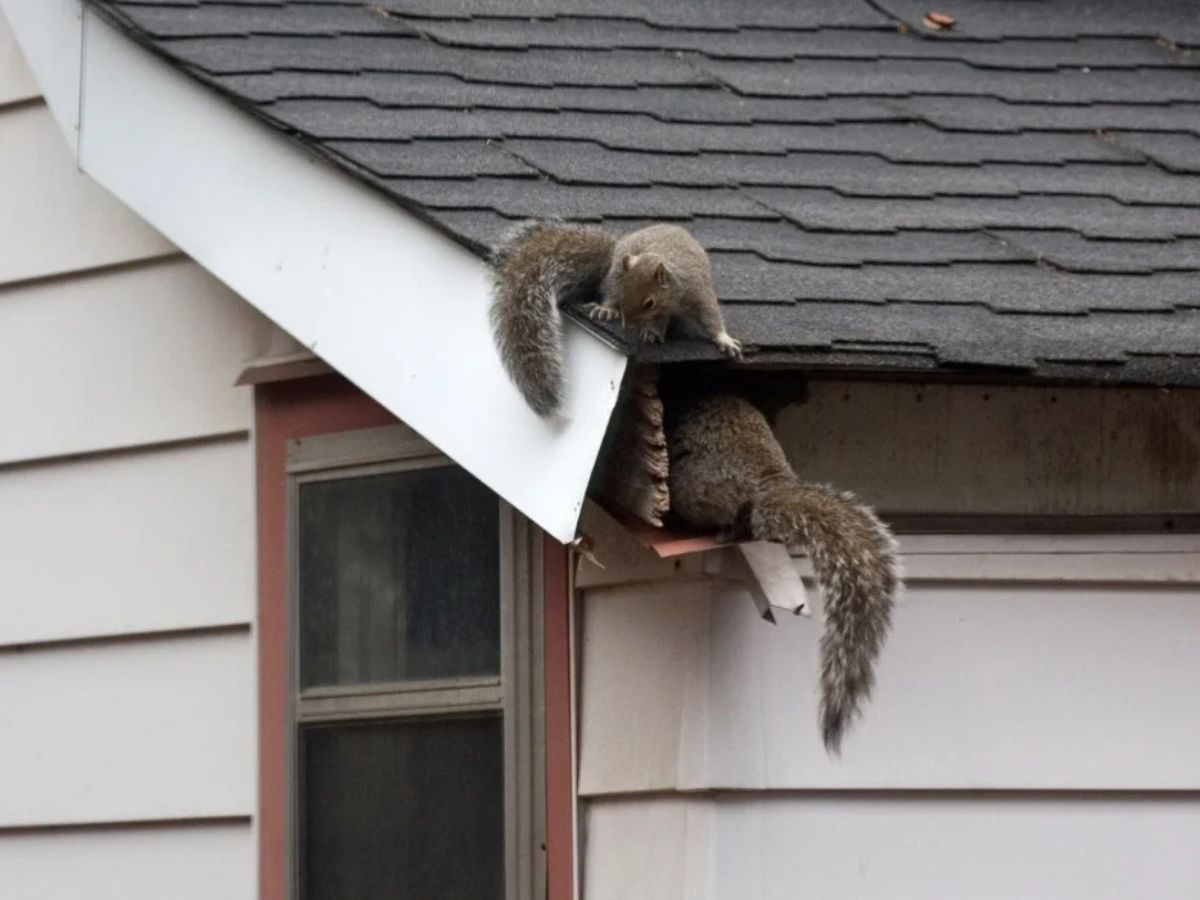
A squirrel repeatedly travelling to the same roof edge, soffit, vent or opening may indicate an active access point.
04
Exterior Damage
Loose soffits, damaged vents, disturbed shingles or enlarged openings may provide access into the structure.
05
Attic Disturbance
Nesting material or other wildlife evidence may be found where attic areas can be safely inspected.
Exterior openingActual conditions matter
Roof and attic access
How Squirrels Get Into Attics and Roof Spaces
Squirrels are capable climbers and can reach vulnerable areas well above ground level. An inspection should focus on the actual building condition rather than assuming there is only one possible entry point.
01
Roof Vents
Damaged or vulnerable vent components may provide a route into the roof space.
02
Loose or Deteriorated Soffits
Movement, wear or damage along soffits can create an accessible opening.
03
Fascia and Roof-Edge Openings
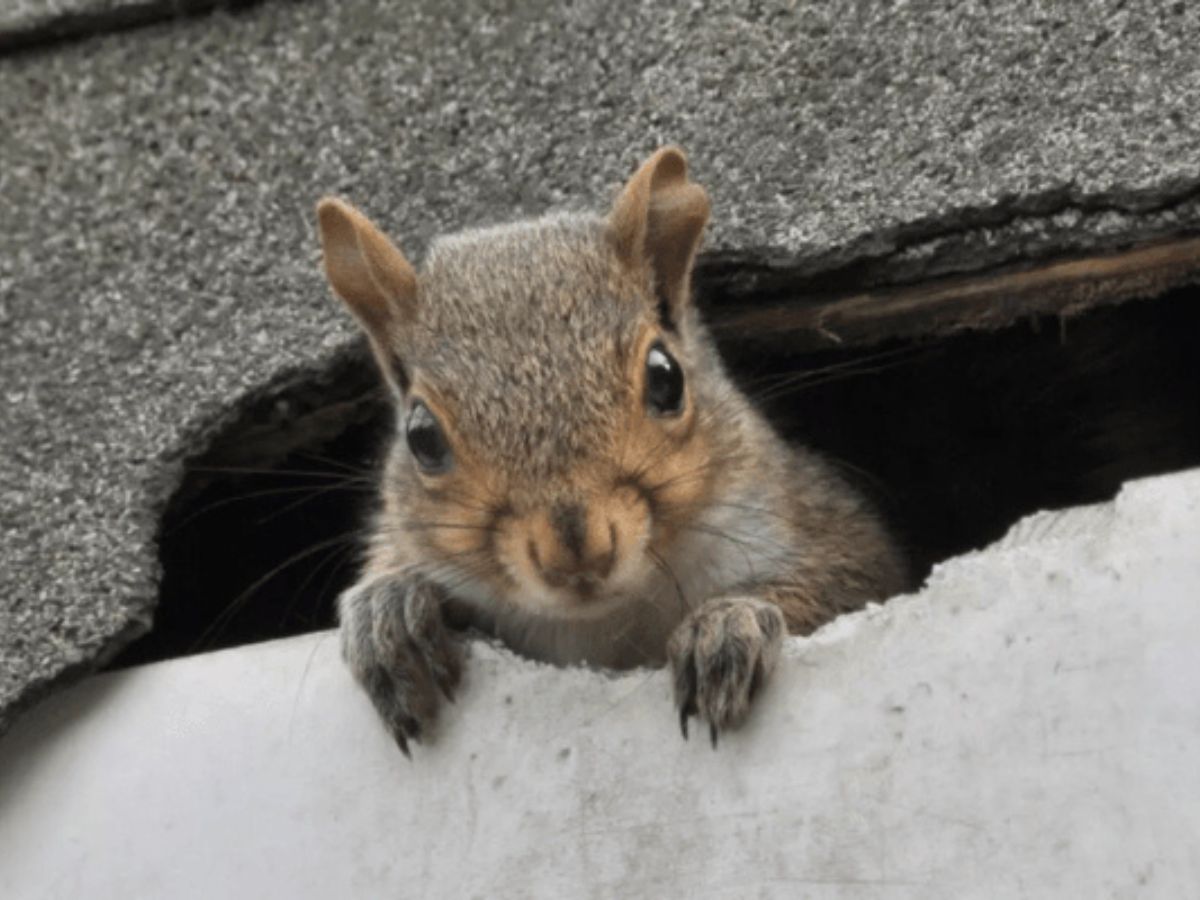
Gaps where fascia, eaves and roofing meet may become active entry locations.
04
Loose Shingles or Damaged Roofing
A damaged roof surface may expose openings beneath the visible materials.
05
Chimney and Roof Openings
Applicable roof penetrations should be considered when the activity pattern points to them.
06
Enlarged Existing Openings
Squirrels may use or enlarge an opening that was already present in the exterior.
A situation-specific service
Our Approach to Squirrel Removal
The appropriate plan depends on the active opening, access conditions and whether dependent young may be present. A one-way door is one possible method, not an automatic inclusion on every job.
01
Inspection
Inspect accessible exterior areas and, where appropriate and safely accessible, interior or attic areas to identify squirrel activity and the active entry point.
02
Assess the Situation
The plan depends on the location of the opening, accessibility and whether dependent young may be present.
03
Removal
Where appropriate, a one-way door may allow squirrels to leave through the active opening while helping prevent re-entry through that opening.
04
Entry-Point Work
After the removal situation is resolved, agreed entry-point work can be completed to help prevent the opening from being reused.
Removal and exclusion are related, but they are not automatically the same scope of work.
Dependent-young planningKeep the nest in the plan.
Baby squirrels
What Happens When Baby Squirrels Are Present?
Dependent young can change the removal plan. Installing a one-way door without first considering the nest could separate a mother from babies that are not yet able to leave on their own.
When safely accessible
A Reunion Opportunity
When a nest can be safely located and accessed, the young may be carefully removed and placed in an appropriate reunion location so the mother has an opportunity to retrieve them.
When access is limited
Adjust the Plan
When dependent young cannot safely be accessed, Reliant may need to adjust the timing or removal method until they are capable of exiting appropriately.
Invasive structural access is not presented as a routine inclusion. Any separate work requiring access through walls, ceilings or other finished materials would need its own assessment and approval.
Define the service scope
Squirrel Removal and Squirrel Proofing Are Different
Securing an active entry point may be part of the agreed squirrel-removal work. Broader roofline, soffit, vent or structural proofing is a separate scope when additional vulnerable areas need to be addressed.
Current activity
Squirrel Removal
Addresses squirrels currently entering or occupying the structure. Depending on the situation, this may involve a one-way exit or another appropriate removal method.
- Assess the active opening
- Consider dependent young
- Select the appropriate removal method
- Complete agreed active-entry work
Additional vulnerabilities
Squirrel Proofing / Exclusion
Addresses openings or vulnerable building areas that allow squirrels or other wildlife to gain access.
- Assess additional roofline areas
- Define vent or soffit work
- Quote broader structural proofing separately
Four clear steps
Our Squirrel Removal Process
The sequence stays clear while the method is adapted to the active opening, property access and squirrel situation.
01
Inspect
Identify activity, accessible entry points and building conditions associated with the problem.
02
Plan
Determine the appropriate approach based on the active opening, accessibility and whether dependent young may be present.
03
Remove
Carry out the appropriate removal method. A one-way door may be used when conditions are suitable.
04
Secure & Follow Up
Complete the agreed entry-point work and any applicable follow-up once the removal stage has been resolved.
The opening remains
Getting the Squirrel Out Is Only Part of the Problem
A squirrel that leaves the attic does not automatically correct the opening it used to enter.
Damaged vents, loose soffits, roof gaps and other vulnerable areas can remain available unless the applicable entry point is properly addressed. That is why inspection and exclusion planning are an important part of a complete wildlife-control approach.
01
Damaged Vents
A damaged vent can remain available after the animal has left.
02
Loose Soffits
Movement or deterioration may leave an accessible roof-edge route.
03
Roof Gaps
The applicable active opening should be addressed within the agreed scope.
Inspection and planning do not promise that every potential opening on the building will be found or secured. The completed scope should be tied to the conditions identified and the work agreed.
Property types
Squirrel Problems Can Differ by Property
Roofline layout, adjoining structures and access requirements can change how the active opening is identified and how the service is planned.
01
Detached Homes
Attics, rooflines, vents and soffits can provide secluded nesting areas when exterior openings develop.
02
Townhouses & Multi-Unit Properties
Connected rooflines and adjoining building sections can make identifying the true active opening more complicated and may require coordination.
03
Commercial Properties
Squirrel activity around roofs, ceiling spaces or exterior building openings may require an inspection adapted to the property’s access and operational needs.
Property-specific pricing
What Affects the Cost of Squirrel Removal?
Squirrel-removal pricing can vary because access, building conditions and removal requirements are different from property to property.
Reliant can often provide initial estimate guidance by phone based on the information available, with final recommendations depending on the property and scope required.
01Height and roof accessibility
02Location of the active entry point
03Number of relevant openings
04Presence of dependent young
05Accessibility of the nest area
06Removal method required
07One-way-door requirements
08Entry-point securing or proofing scope
09Connected or multi-unit building conditions
Coverage boundarySpecific work performed
Follow-up and entry-point work
Follow-Up and Secured Entry-Point Work
Follow-up requirements depend on the removal method and conditions found at the property.
Where Reliant completes qualifying entry-point securing or exclusion work, the applicable coverage relates to the specific work performed—not every potential wildlife opening on the building.
Coverage is tied to the qualifying entry-point work Reliant completed and does not extend to new or separate openings elsewhere on the building.
Squirrel removal FAQ
Squirrel Removal FAQs
Concise answers about evidence, access, removal method, dependent young, proofing, timing and pricing.
How do I know if squirrels are in my attic?
Fast movement, scratching or gnawing, repeat daytime activity at a roof edge and accessible nesting evidence may be consistent with squirrels. No single sign proves the species, so the location, timing and building conditions should be considered together.
Why do I hear squirrel activity during the day?
Squirrels are primarily active during daylight hours. Daytime movement can be an important clue, but noise alone does not confirm the species.
How do squirrels get into a roof or attic?
Potential routes include damaged roof vents, loose soffits, fascia or roof-edge gaps, disturbed shingles and existing openings that have been enlarged. The relevant opening depends on the actual property conditions.
Do you use one-way doors for squirrel removal?
A one-way door may be used when the active opening, access and squirrel situation make it appropriate. It is not automatically used on every squirrel job, particularly when dependent young may be present.
What happens if baby squirrels are inside?
If the nest can be safely located and accessed, the young may be placed in an appropriate reunion location so the mother has an opportunity to retrieve them. If access is not safe or practical, the timing or method may need to change.
Will you seal the squirrel entry point?
After the removal stage is resolved, Reliant can complete the agreed work for the applicable active entry point. The exact securing or repair scope depends on the opening and the work approved.
Is full squirrel proofing included with removal?
No. Broader roofline, soffit, vent or structural proofing is a separate scope when additional vulnerable areas need to be addressed.
How long does squirrel removal take?
Timing depends on access, the removal method, squirrel activity and whether dependent young are present. Reliant explains the expected process for the property rather than promising one universal number of days.
What affects the cost of squirrel removal?
Height, roof access, the active opening, nest accessibility, dependent young, removal method, one-way-door requirements and the agreed entry-point or proofing scope can all affect pricing.
Related wildlife services
Related Wildlife Services
These verified service pages cover related wildlife situations without expanding the scope of squirrel removal.
01
Raccoon Removal
For active raccoon concerns involving rooflines, attics and other accessible den areas.
02
Wildlife Exclusion & Proofing
For broader assessment and proofing of additional vulnerable building areas.
03
Deck & Shed Wildlife Proofing
For separate exclusion and perimeter-proofing options around low structures.
A clear next step
Hearing Squirrels in Your Attic or Roof?
Reliant can inspect the property, identify the active entry point and recommend an appropriate squirrel-removal and exclusion approach based on the conditions found.