
Hornet Nest Removal
Professional hornet nest assessment and control for properties in Toronto, the GTA and selected surrounding Ontario communities. The appropriate service approach depends on the nest location, access and whether physical removal is practical and appropriate.
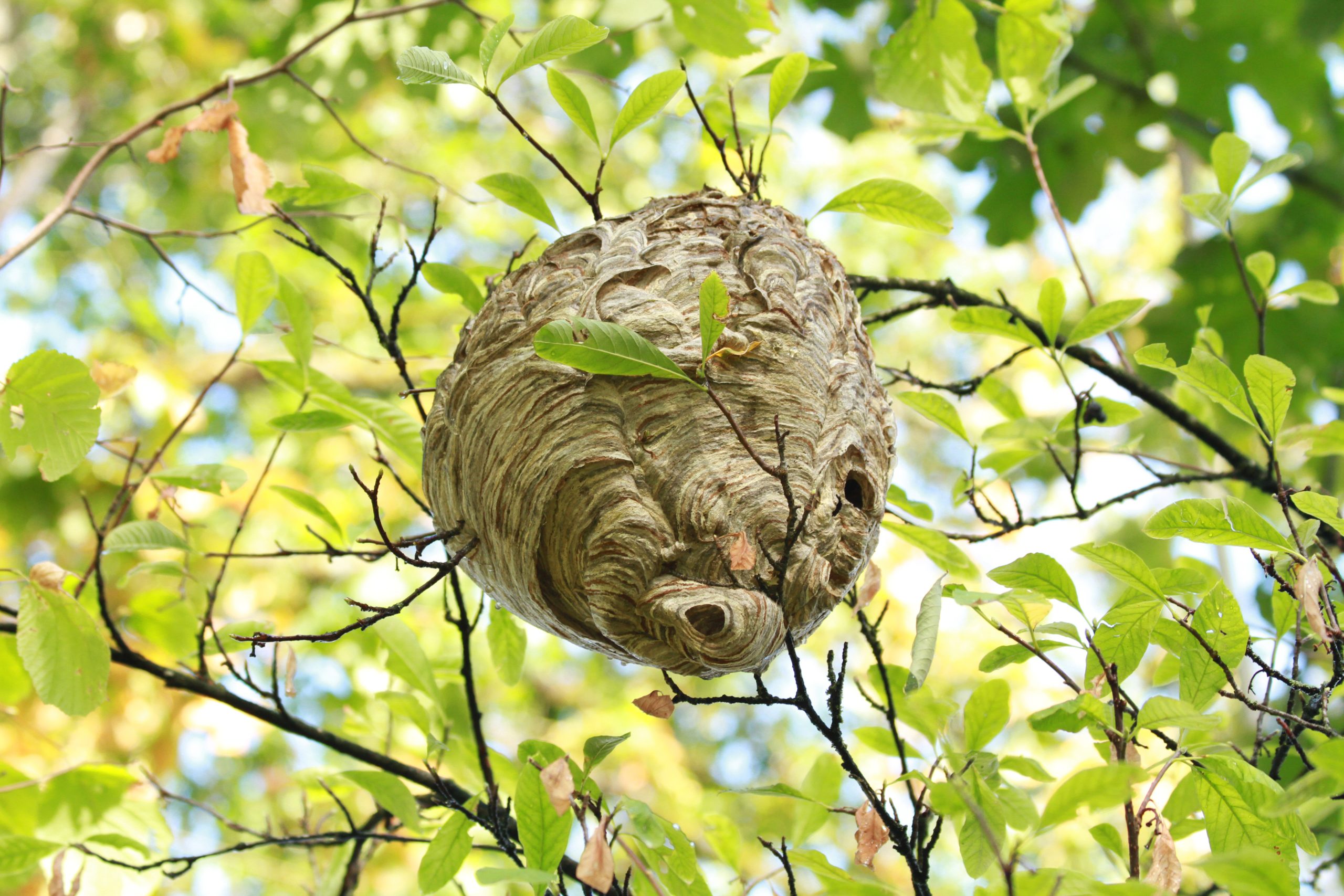
BALD-FACED “HORNET”
Despite the common name, it is an aerial yellowjacket.
AERIAL NESTS
Large enclosed paper nests may be built in trees, shrubs or around eaves.
PROTECTED CAVITIES
European hornets commonly use protected locations such as hollow trees and wall voids.
TREATMENT VS REMOVAL
Controlling active nest activity and physically removing the nest are not always the same service step.
Is It a Hornet?
Not every large stinging insect around a property is a true hornet. A large gray enclosed paper nest hanging from a tree, shrub or eave is commonly associated with the bald-faced hornet — an aerial yellowjacket despite its common name.
European hornets are true hornets and are more likely to use protected cavities such as hollow trees or wall voids.
If the insect or nest type is unclear, the nest location and activity pattern can help determine the appropriate service.
- Visible, exposed exterior wasp nest → Wasp Nest Removal.
- Unsure whether the activity is wasps or hornets → Wasp & Hornet Control.
- Activity repeatedly entering soil or a ground opening → Ground Wasp Control.
Bald-Faced Hornets and European Hornets
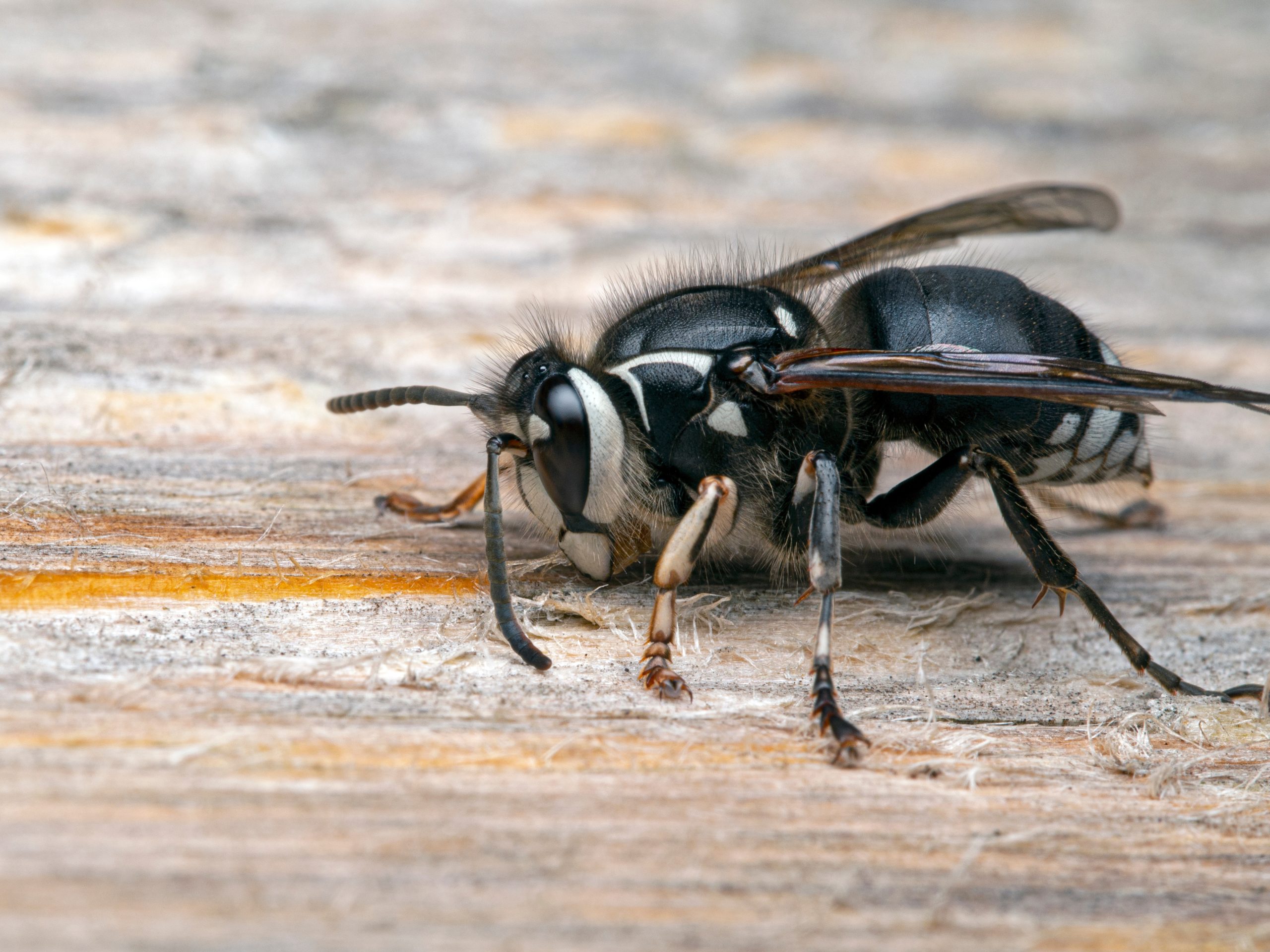
Bald-Faced Hornet
Bald-faced hornets have distinctive black-and-white markings and build enclosed gray paper nests above ground. Nests are often found in trees and shrubs and may also appear around building eaves.
Despite the common name, the bald-faced hornet is an aerial yellowjacket rather than a true hornet.
European Hornet
European hornets are large true hornets found in parts of Ontario. Unlike the exposed aerial nests associated with bald-faced hornets, European hornets more often use protected cavities such as hollow trees, wall voids and similar enclosed spaces.
Where Hornet Activity May Be Found
Trees and Shrubs
Bald-faced hornets may build visible enclosed nests among branches, while hollow trees may provide protected cavities for European hornets.
Eaves and Rooflines
An exposed nest may be visible beneath an eave, while repeated insect traffic into a consistent opening can indicate activity inside a protected space.
Hollow Trees and Cavities
A nest located inside a hollow tree, wall or other enclosed space may not be physically accessible even when the activity location can be identified.
Elevated or Difficult Access
Height, roofline access, vegetation, surrounding obstacles and site conditions can affect the practical service approach.
Treatment and Physical Nest Removal Are Different
The first objective is to address active nest activity. Whether the nest itself can also be physically removed depends on where it is located and how it can be accessed.
Treatment / Active Control
The service approach is selected according to the identified nest location, activity and available access.
For concealed or protected locations, treatment may be appropriate even when the nest cannot be physically reached without opening the surrounding material.
Physical Nest Removal
For an exposed and accessible nest, physical removal may be performed after treatment when appropriate.
A nest inside a wall, soffit, roof cavity, hollow tree or another enclosed location may not be physically removable as part of standard service.
Standard hornet treatment does not automatically include opening walls, soffits, roof components or trees, and it does not automatically include structural repairs or exclusion work.
What to Expect From Hornet Nest Service
Confirm the Activity
Identify the likely nest location, insect activity and whether the situation appears exposed, concealed or difficult to access.
Assess Location and Access
Evaluate the nest position, height, surrounding conditions and practical access before deciding on the service approach.
Treat the Active Nest Area
Carry out the appropriate treatment for the identified location and active nest situation.
Remove the Nest When Appropriate
Where an exposed nest is accessible and suitable for removal, physical removal may follow treatment. For concealed or inaccessible nests, after-service guidance should explain the relevant next steps and limitations.
When the Nest Is Concealed or Difficult to Reach
Wall, Soffit and Roof Cavities
Visible insect traffic may help locate an entry point, but the nest itself can be deeper inside the structure. Standard hornet treatment does not automatically include opening building materials to reach the nest. Repairs, sealing and exclusion are separate from standard hornet treatment unless specifically quoted.
Hollow Trees
A hollow tree can provide a protected nest location. Because the colony may be inside the tree cavity, physical nest removal may not be practical without opening or damaging the tree. Standard hornet treatment does not include cutting open a tree.
Elevated Nests
Elevated nests are assessed individually. Height, access, roof configuration, ground conditions and surrounding obstacles can affect what service is practical.
Avoid Disturbing an Active Nest
Do not strike, cut or deliberately disturb an active nest.
For activity entering a wall, soffit or another cavity, do not seal the active opening while insects are still using it. Blocking an active entrance can cause the insects to seek another route.
Keep people and pets away from the immediate nest area where practical and avoid standing directly in the flight path.
If the nest is elevated, concealed or difficult to access, have the situation assessed before attempting to reach it.
What Affects Hornet Nest Removal Pricing?
Pricing depends on the specific nest situation rather than the insect name alone.
Nest Location
Exposed, elevated, concealed and cavity locations can require different approaches.
Height and Accessibility
Access to the nest area can affect the service required.
Number of Active Locations
More than one active nest or entry location can change the scope.
Site Conditions
Rooflines, vegetation, obstacles and property conditions can affect access and service planning.
Treatment and Removal Complexity
An exposed removable nest is different from activity inside a cavity where physical removal may not be practical.
Free estimates by phone may be available based on the information provided. Some situations require additional assessment before the service scope can be determined.
Hornet Nest Removal FAQs
Is a bald-faced hornet really a hornet?
Despite its common name, the bald-faced hornet is an aerial yellowjacket rather than a true hornet. It is well known for building large enclosed gray paper nests above ground, including in trees, shrubs and around eaves.
Where do European hornets usually nest?
European hornets often use protected cavities such as hollow trees, wall voids and other enclosed spaces. Their nest may therefore be less visible than the exposed aerial nest associated with bald-faced hornets.
Can a hornet nest in a tree be removed?
It depends on the nest type and location. An exposed and accessible aerial nest may be physically removed after treatment when appropriate. A colony located inside a hollow tree may be treatable without the nest itself being physically removable.
Do you always remove the nest after treatment?
No. Treatment and physical nest removal are separate steps. Physical removal depends on whether the nest is exposed, accessible and appropriate to remove. Concealed nests may remain inside the cavity when opening the surrounding structure or tree is outside the service scope.
What if hornets are entering a wall or soffit?
Repeated activity through a consistent opening can indicate a concealed nest or protected activity space. The location and access need to be assessed. Standard hornet treatment does not automatically include opening walls, soffits or roof components.
Should I seal the hole hornets are using?
Do not seal an actively used nest opening while insects are still entering and leaving. Blocking the entrance can cause them to seek another route. Any sealing or repair should be considered only at the appropriate stage and is separate from standard treatment unless specifically quoted.
Can you service a very high hornet nest?
Elevated nests are assessed individually. Height is only one factor; access, rooflines, ground conditions, vegetation and surrounding obstacles can all affect what service is practical. Do not promise that every elevated nest can be reached or physically removed.
How much does hornet nest service cost?
Pricing depends on factors such as nest location, height and accessibility, the number of active locations, site conditions and the complexity of treatment or physical removal. Free estimates by phone may be available based on the information provided.
What if I am not sure whether I have wasps, hornets or a ground nest?
The nest location and activity pattern can help determine the correct service. Visible exposed wasp nests can be directed to Wasp Nest Removal, uncertain wasp-or-hornet activity to Wasp & Hornet Control, and repeated activity entering soil or a ground opening to Ground Wasp Control.
Related Wasp and Hornet Services
Wasp & Hornet Control
For general or uncertain wasp and hornet activity when the exact nest type is not clear.
Ground Wasp Control
For repeated stinging-insect activity entering soil or a ground opening.
Need Help With Hornet Activity?
If you have found a large aerial nest, repeated activity around a cavity or another hornet concern, contact Reliant to discuss the location and access.
Serving Toronto, the GTA and selected surrounding Ontario communities.