Residential & Commercial
Wasp and hornet control for homes, businesses and managed properties.
Professional pest control for stinging insects
Wasps or hornets nesting around your home or business can become difficult to deal with quickly—especially when activity is close to entrances, patios, walkways, rooflines or other frequently used areas.
Reliant provides targeted wasp and hornet control for exposed, concealed, ground-level and difficult-to-access nest situations across Toronto, the GTA and selected surrounding Ontario communities.
When an exterior paper nest is exposed and safely reachable, physical nest removal can be completed when appropriate. Concealed nests in wall or soffit voids and underground nests are treated according to their location, access and activity.
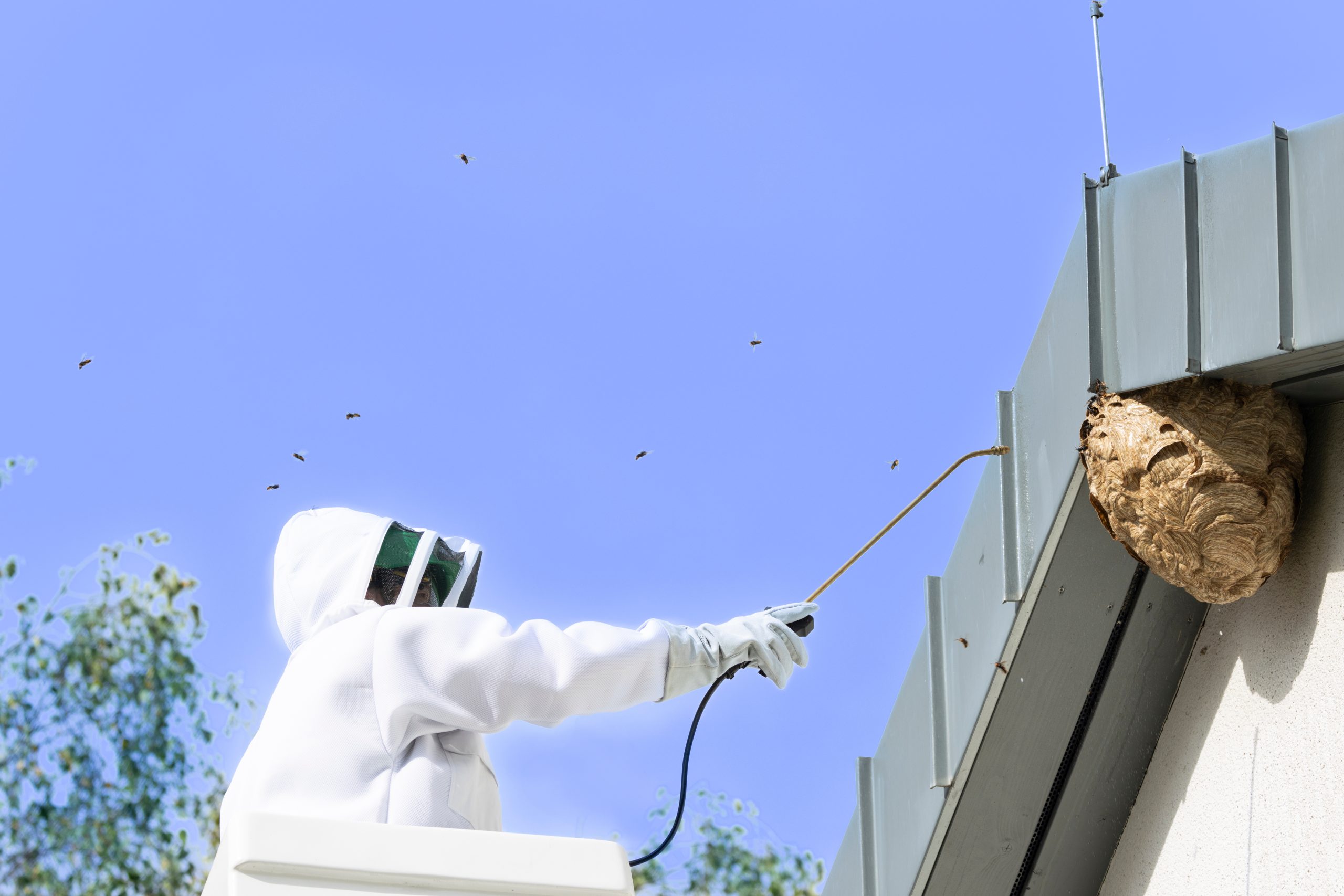
Wasp and hornet control for homes, businesses and managed properties.
Service for exposed nests, concealed activity, ground nests and other accessible nest locations.
The approach is selected according to the nest location and conditions—not every nest is handled the same way.
The treated location is covered for three months, subject to the same-location guarantee terms explained below.
Why location matters
Seeing an occasional wasp outdoors does not always mean there is a nest on the property. Repeated activity concentrated around the same opening, roofline, section of lawn or exterior structure can be a sign that a nesting site is nearby.
Some nests are easy to see. Others may be concealed behind soffits, inside wall voids, below ground or in other protected locations.
The location matters because an exposed paper nest and a concealed or underground nest cannot always be treated the same way.
Reliant looks at where the activity is occurring, how the insects are entering and leaving the nest area, accessibility, and surrounding property conditions before determining the appropriate control approach.
Signs and evidence
You may not always be able to see the nest itself. Look for patterns of activity around the property.
01
Wasps repeatedly entering and leaving the same area can indicate an active nest or nesting site nearby.
02
Exposed paper nests may appear beneath eaves, overhangs, decks, sheds, branches or other protected exterior areas.
03
Repeated movement through a small opening around a soffit, roofline, siding or other exterior gap may indicate concealed activity.
04
Consistent activity around a hole or opening in a lawn, garden or landscaped area may indicate a ground nest.
05
A noticeable increase in wasp activity around one part of a building or yard deserves closer assessment, particularly when the same flight path continues throughout the day.
Nest locations
Finding the nest—or understanding where the activity is leading—is an important part of choosing the right treatment.
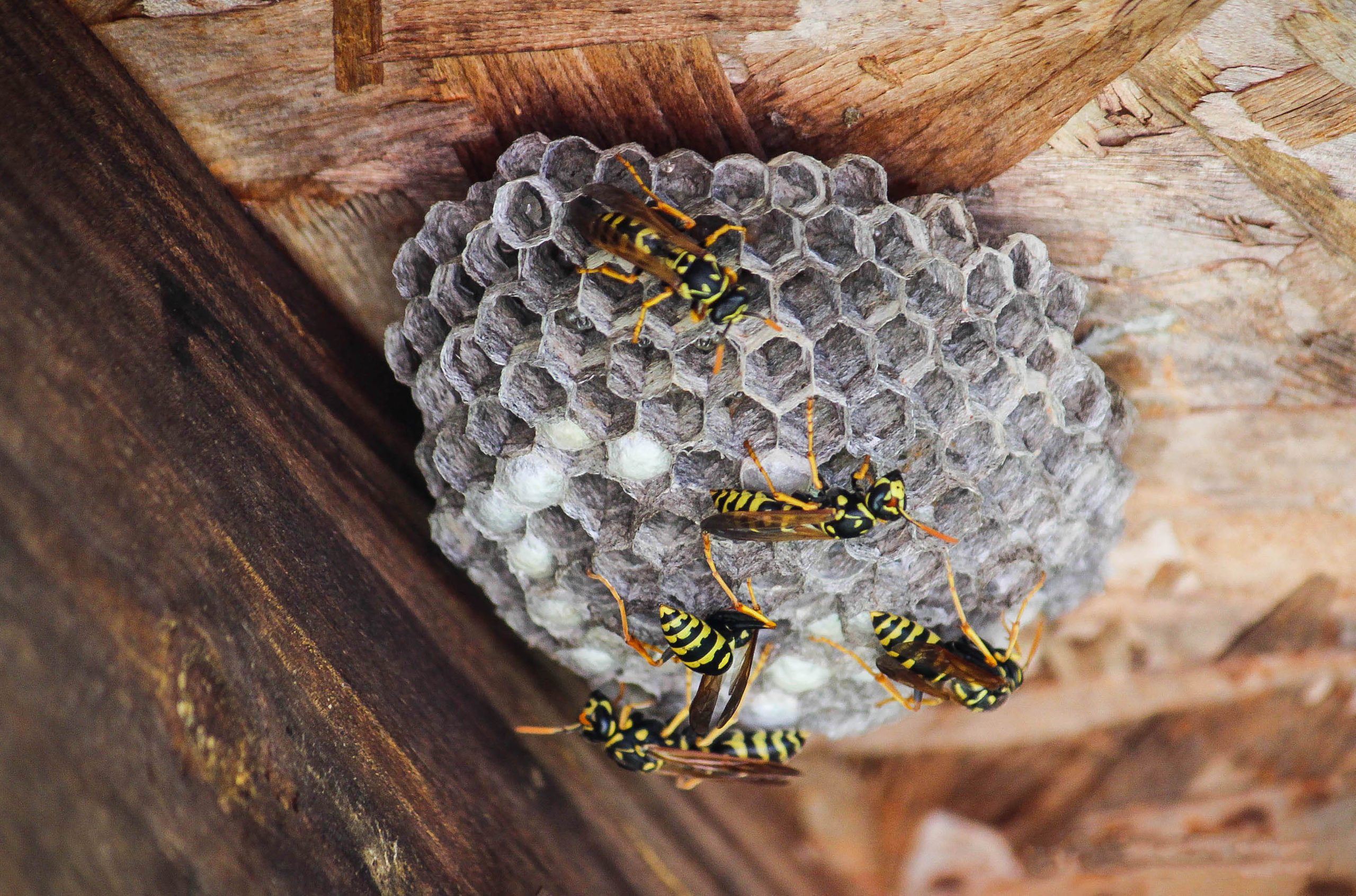
Paper nests may be attached beneath eaves, overhangs, decks, railings, sheds, branches or other exterior surfaces.
When an active exterior nest is exposed and safely reachable, Reliant can treat the nest and physically remove it when appropriate.
Wasps can sometimes enter through an exterior opening and establish activity inside a protected void.
When the nest is concealed behind a soffit, wall or other building component, physical removal may not be practical. The active nest area is treated according to its location and accessibility.
Some wasp activity originates below ground, with insects repeatedly entering and leaving a ground opening.
These situations are treated at the active nest location rather than attempting to excavate and physically remove the underground nest.
Nest height, roof configuration, surrounding structures and safe access can affect how the service is performed.
Reliant assesses the location and determines an appropriate treatment approach based on the actual site conditions.
Service approach
The goal is not simply to spray visible insects. The service should address the active nest location using an approach appropriate for where the nest is situated.
Concealed, underground and other nests that are not suitable for physical removal are treated at the active nest or access area.
The treatment method is selected according to the location, accessibility and activity present at the property.
When an exterior paper nest is exposed and safely reachable, physical removal can be completed after the nest has been appropriately treated.
Physical nest removal is not automatically required—or possible—for every nest. Concealed wall or soffit activity and underground nests are normally handled through targeted treatment rather than structural dismantling or excavation.
Wasp treatment addresses the current nesting activity.
Where building openings, waste management, outdoor food sources or other property conditions may contribute to future activity, practical preventive steps can be discussed separately.
Major structural sealing or repair is not automatically included with a wasp or hornet treatment.
What to expect
We start by understanding where you are seeing activity and whether the nest appears to be exposed, concealed, underground, elevated or otherwise difficult to access.
The location and activity determine whether targeted treatment, physical nest removal, or a combination of the two is appropriate.
The nest or active access area is treated according to the situation. When an exposed exterior paper nest is safely reachable, it can also be physically removed when appropriate.
We explain what was treated, what to expect after service, and how the three-month same-location guarantee applies.
Safety around an active nest
An active nest can become defensive when it is disturbed.
If you suspect a nest around your home or business, avoid striking it, attempting to pull it down, or repeatedly approaching the nest entrance to investigate it.
Keep people and pets away from the immediate active area where practical until the situation can be assessed.
This is especially important when activity is concentrated around entrances, decks, patios, walkways, play areas or other places where people regularly pass nearby.
Professional treatment allows the nest location and access conditions to be considered before the service approach is selected.

Prevention and contributing conditions
Treating an existing nest and reducing future attractants are separate parts of the problem.
Outdoor garbage and waste containers should remain closed and managed regularly.
Food, sugary drinks and other outdoor food sources can attract wasps to patios, decks and gathering areas.
Checking protected exterior areas such as eaves, overhangs and sheds earlier in the season may help identify nest activity before it becomes more established.
If an exterior opening appears relevant to concealed activity, structural sealing or repair should be considered separately after the active nest issue has been properly addressed.
Prevention needs vary by property. No single measure can prevent every future wasp or hornet nest.
Commercial and managed properties
Wasp activity around entrances, patios, loading areas, waste areas, rooflines or other high-traffic locations can create problems for employees, customers, tenants and property managers.
Reliant provides wasp and hornet control for commercial and managed properties, with service based on the actual location and accessibility of the nest.
The appropriate service depends on the active area, access requirements, number of nest locations and operating conditions at the property.
For commercial properties with recurring pest-management needs beyond a single wasp or hornet issue, ongoing pest-control options can be discussed separately.
Service pricing
There is no single price that accurately describes every wasp or hornet job. The service required depends heavily on where the nest is located and how it can be accessed.
Contact Reliant with information about where you are seeing activity. We can determine the appropriate next step and provide pricing based on the service required.
An exposed exterior nest is different from activity inside a wall, soffit or underground location.
Upper rooflines, trees, restricted areas or difficult access can affect the equipment and service approach required.
More than one active nest or separate areas of activity may change the scope of the service.
Residential, commercial and managed properties can involve different access, scheduling and site considerations.
Concealed or difficult-to-reach activity may require a different approach from a straightforward exposed nest.
Guarantee and follow-up
Reliant’s wasp and hornet control service includes a three-month guarantee for the same treated location.
If renewed activity associated with that treated spot occurs during the guarantee period, contact us so the location can be assessed under the guarantee.
The guarantee applies to the same treated location.
A completely new nest or separate wasp or hornet activity that develops elsewhere on the property is a different nest situation and is not considered a return of the original treated location.
This distinction matters because new nests can occur independently in other suitable areas of a property.
Common questions
When an exterior paper nest is exposed and safely reachable, Reliant can physically remove the nest after appropriate treatment.
Concealed wall or soffit nests and underground nests are normally treated at the active nest location rather than physically removed.
When wasps are entering through an exterior opening and the nest is concealed inside a wall, soffit or similar void, the service focuses on treating the active nest area based on its location and accessibility.
Physical removal is not always practical for concealed nests.
Yes. Ground-nesting wasp activity can be treated at the active nest location.
The approach differs from an exposed paper nest because the nest is below ground rather than hanging from an accessible exterior surface.
No.
Physical removal is appropriate for exposed, reachable exterior paper nests. Concealed, underground or otherwise inaccessible nests are generally handled through targeted treatment.
The service includes a three-month guarantee for the same treated location.
If activity associated with that treated spot returns during the guarantee period, contact Reliant so the situation can be assessed under the guarantee.
No.
The guarantee applies to the same treated location. A new nest that develops elsewhere on the property is a separate nest and requires a separate assessment.
Same-day appointments may sometimes be available depending on scheduling and location, but same-day service is not guaranteed.
Contact Reliant to check current availability.
Yes. Reliant can address mud dauber activity.
Because mud daubers are different from colony-forming wasps and hornets, the appropriate response depends on where the activity is occurring and whether control is actually needed at the property.
Yes.
Reliant provides service for residential, commercial and managed properties. Commercial service is based on the nest location, access requirements and conditions at the site.
Price can vary based on nest location, accessibility, height, number of active nest locations, property type and treatment complexity.
An exposed reachable nest is usually a different service situation from concealed activity in a structure or an underground nest.
Disturbing an active nest can increase the risk of being stung.
If there is significant activity around the nest or the nest is difficult to reach, avoid disturbing it and have the situation assessed before attempting removal.
Talk with Reliant
Whether the nest is exposed, concealed, underground or difficult to access, the right approach depends on where the activity is located and what is happening at the property.
Reliant provides wasp and hornet control for homes, businesses and managed properties across Toronto, the GTA and selected surrounding Ontario communities.
Get in touch and tell us where you are seeing activity.
Same-day service may sometimes be available depending on scheduling. Availability is not guaranteed.